











In today's fast-paced outdoor maintenance world, professionals and enthusiasts alike are seeking tools that boost efficiency while reducing physical strain. The electric wagon suitability for gardening, farming, and landscaping has become a hot topic, as these battery-powered utility vehicles offer a modern alternative to traditional manual labor tools. Whether you're a homeowner tending a backyard garden, a farmer managing daily chores, or a landscaping contractor juggling multiple job sites, an electric wagon for landscaping, gardening, or farming could transform how you work. This comprehensive guide explores the real-world applications, benefits, and considerations of investing in an electric utility wagon. We'll compare it to classic options like wheelbarrows, dive into specific use cases, and show how it pairs with other equipment for maximum productivity.
What Is an Electric Wagon and Why Is It Becoming Popular?
An electric wagon, also known as a battery-powered garden wagon or motorized utility cart, is a self-propelled hauling device powered by rechargeable batteries and an electric motor. Unlike traditional push carts, it features variable speed controls, often forward and reverse capabilities, and robust frames designed to handle heavy loads across varied terrains. Traditional tools like the classic wheelbarrow, basic garden cart, or standard utility cart rely entirely on human power. A wheelbarrow excels at short-distance dumping but struggles with stability on uneven ground and limits load size due to balance requirements. Garden carts offer more stability with multiple wheels but still demand significant effort to push or pull, especially when loaded. Electric wagons bridge this gap by providing powered assistance, allowing users to move larger quantities with minimal exertion. The rise in popularity stems from several industry pressures: rising labor costs, demands for higher operational efficiency, and the need to manage larger properties effectively. In gardening, farming, and landscaping, where repetitive heavy lifting is common, businesses and individuals are turning to outdoor material transport equipment to stay competitive. Electric models produce zero emissions during operation, operate quietly, and require less maintenance than gas-powered alternatives, making them ideal for residential areas and eco-conscious operations.
Why Gardening, Farming, and Landscaping Operations Need Efficient Material Transport
Daily operations in these fields involve moving a wide variety of materials. Here's a quick overview:
| Material | Gardening | Farming | Landscaping |
|---|---|---|---|
| Soil | ✓ | ✓ | ✓ |
| Mulch | ✓ | ✓ | ✓ |
| Fertilizer | ✓ | ✓ | ✓ |
| Plants / Seedlings | ✓ | ✓ | ✓ |
| Feed / Harvest | ✓ | ||
| Tools & Equipment | ✓ | ✓ | ✓ |
| Debris & Clippings | ✓ | ✓ | ✓ |
Relying on manual methods leads to time wasted on multiple trips, heightened risk of musculoskeletal injuries, and escalating operational costs. For landscaping productivity tools and farm hauling equipment, efficiency directly impacts profitability. An electric cart for landscaping business can dramatically cut down on these pain points, enabling crews to complete more work in less time while preserving energy for precision tasks.
Is an Electric Wagon Suitable for Gardening?
For homeowners and hobbyist gardeners, a battery-powered garden wagon proves incredibly practical. It excels at transporting potted plants, bags of mulch, soil amendments, fertilizers, and pruning tools around the property. No more struggling with multiple wheelbarrow loads or risking back strain on sloped lawns. Key advantages include significantly reduced physical strain — the powered drive handles the heavy lifting so you can focus on planting and arranging. Maintenance tasks become faster, allowing you to cover more ground in a single session. These wagons perform admirably on uneven terrain, including grass, light mud, and gentle slopes, thanks to wide pneumatic tires and balanced weight distribution. As noted in practical overviews, for medium to large gardens, an electric wagon can significantly reduce manual labor by transporting soil, mulch, plants, and tools across uneven terrain. Compared with traditional wheelbarrows, electric wagons improve efficiency and reduce operator fatigue, making them a practical investment for homeowners and professional gardeners alike.
Is an Electric Wagon Suitable for Farming Applications?
Farms present larger-scale demands, where an electric utility wagon shines in transporting feed bags, fertilizer sacks, seed supplies, harvested crops, and irrigation components. Small to medium operations benefit immensely from the increased daily capacity without needing additional labor.
Benefits for Small and Medium Farms
These wagons enhance overall productivity by allowing one operator to move substantial loads quickly. Labor utilization improves as workers spend less time hauling and more time on value-adding activities. Daily transportation capacity can double or triple, depending on the model and terrain.
Performance Across Different Farm Terrains
Electric wagons handle dirt roads, grass paths, orchards, and vineyards effectively. Their low center of gravity and powered traction provide stability where wheelbarrows would tip or require excessive effort.
| Farm Task | Traditional Cart | Electric Wagon |
|---|---|---|
| Feed Transport | High Effort | Low Effort |
| Harvest Collection | Slow | Faster |
| Tool Transport | Manual | Assisted |
| Daily Productivity | Lower | Higher |
Is an Electric Wagon Suitable for Landscaping Businesses?
For professional landscape contractors, time truly equals profit. An electric cart for landscaping business or best electric wagon for landscaping business streamlines operations involving mulch installation, tree planting, hardscape work, and site cleanup. Crews frequently move stone, soil, plants, and equipment — tasks that quickly add up in physical toll and time.
Improve Crew Productivity
With greater load capacity and powered movement, crews make fewer return trips. This translates to higher square footage completed per day and better project turnaround times.
Reduce Worker Fatigue and Injury Risks
Lower instances of back strain, shoulder injuries, and repetitive stress issues help maintain a healthier, more reliable workforce. Reduced downtime from injuries also protects the bottom line.
Support Larger Commercial Projects
Electric wagons scale well for parks, campuses, municipal properties, and golf courses, where consistent material flow is essential. For landscaping companies, electric wagons can improve crew productivity, reduce physical strain, and accelerate material movement across job sites. Businesses managing large commercial landscapes often use electric transport equipment to reduce labor costs and increase operational efficiency.
Electric Wagon vs Traditional Wheelbarrow: Which Is Better?
| Feature | Electric Wagon | Wheelbarrow |
|---|---|---|
| Operator Effort | Very Low | High |
| Load Capacity | High (often 500-1000+ lbs) | Medium |
| Productivity | High | Medium |
| Terrain Adaptability | Better | Limited |
| Operating Cost (Long-term) | Medium | Low |
| Long-Term ROI | High | Moderate |
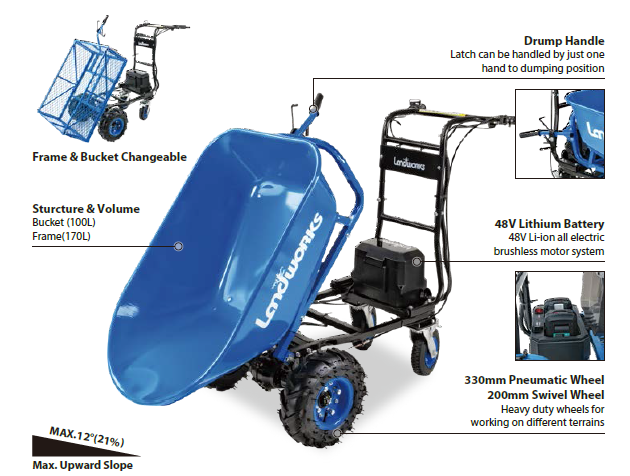
Wheelbarrows remain useful for very small yards or occasional light tasks due to their simplicity and low upfront cost. However, for professional users, commercial landscaping, farms, or larger properties, the electric wagon vs wheelbarrow comparison clearly favors the powered option for sustained use. An landworks electric wheelbarrow may also be suitable for lighter-duty applications where maneuverability is a priority.
Factors to Consider Before Buying an Electric Wagon
Payload Capacity
Look for models ranging from 200 to 1000+ lbs, matching your typical loads. Consider towing capacity for additional trailers if needed.
Battery Runtime
Evaluate runtime against your working hours and available charging opportunities. Lithium-ion batteries often provide 2-5 hours of use, with quick-swap options on premium models.
Terrain Compatibility
Pneumatic tires and adjustable speed controls are crucial for grass, gravel, mud, and slopes.
Maintenance Requirements
Focus on battery health, tire condition, and motor durability. Electric systems generally require less upkeep than gas engines.
Total Cost of Ownership
Beyond purchase price, factor in labor savings, productivity gains, and service life. Many users report payback within the first season through efficiency alone.
Beyond Transportation: Why Debris Collection Is Equally Important for Outdoor Property Maintenance
Transportation is only one part of the maintenance cycle. After mowing, trimming, or seasonal cleanups, dealing with leaves, grass clippings, twigs, and organic debris remains essential. Without efficient collection, projects drag on, costs rise, and property quality suffers. Many professionals combine electric wagons with powerful leaf vacuums for a complete workflow. This duo handles collection and haul-away seamlessly.
How Professional Contractors Combine Electric Wagons and Leaf Vacuums for Maximum Efficiency
A typical high-efficiency workflow looks like this:
Tree and shrub trimming or mowing generates debris.
Leaf vacuum collects material quickly into a hopper or discharge chute.
Electric wagon transports the load to a central disposal, compost, or truck loading area.
Repeat with minimal downtime.
This combination reduces crew size requirements and accelerates project completion.
Why Outdoor Equipment Buyers Choose Intradin as a Manufacturing Partner
For distributors, retailers, landscaping equipment brands, and commercial outdoor service providers, selecting the right manufacturing partner matters as much as the equipment itself. Intradin specializes in professional-grade outdoor power equipment, including high-performance leaf vacuum solutions that complement electric wagons perfectly for comprehensive grounds maintenance.
Professional Leaf Vacuum Product Portfolio
Intradin offers versatile options tailored to different scales:
Walk-Behind Leaf Vacuums: Perfect for residential communities, gardens, parks, and smaller landscaped properties.
Tow-Behind Leaf Vacuums: Ideal for large estates, farms, orchards, and golf courses.
Truck Loader Leaf Vacuums: Built for municipal cleanup and high-volume commercial contractors.
| Product Type | Typical Application |
|---|---|
| Walk-Behind | Gardens, Yards, Parks |
| Tow-Behind | Farms, Orchards, Large Properties |
| Truck Loader | Municipal and Commercial Cleanup |
OEM and ODM Development Services
Intradin supports private label manufacturing, full OEM production, ODM development, custom features, and compliance for specific markets. This helps retailers, importers, distributors, and brands rapidly launch or expand their own lines of commercial outdoor work equipment.
Built for Professional Outdoor Maintenance
Designed specifically for seasonal leaf cleanup, lawn care, municipal grounds management, landscaping services, and farm operations, Intradin equipment delivers reliability season after season.
Looking for a Reliable Leaf Vacuum Manufacturer?
Whether you are a landscaping equipment distributor, outdoor power equipment retailer, municipality supplier, or commercial contractor, Intradin can help you expand your product portfolio with professional leaf vacuum solutions.
Walk-Behind Leaf Vacuums
Tow-Behind Leaf Vacuums
Truck Loader Leaf Vacuums
Frequently Asked Questions
Are electric wagons worth the investment for landscaping businesses?
Yes, especially for operations handling frequent heavy material transport. The productivity gains and labor savings often provide strong ROI within the first year.
How does an electric wagon compare to a wheelbarrow for farming?
Electric wagons offer superior capacity, reduced effort, and better terrain performance, making them preferable for larger or repetitive tasks.
What maintenance do battery-powered garden wagons require?
Regular battery charging, tire pressure checks, and occasional lubrication. Far less intensive than gas-powered equipment.