











Leaf vacuum is often discussed as if it were just another seasonal garden tool, but in professional and industrial contexts, it plays a much bigger role. For landscaping contractors, municipal maintenance teams, agricultural operators, and property managers, a leaf vacuum is not about convenience—it is about efficiency, consistency, and control over debris management.
This page is built as a pillar guide around leaf vacuum. It looks beyond surface-level descriptions and explains how leaf vacuum equipment is actually used in real working environments, what differentiates one configuration from another, and how buyers can make informed decisions based on workload, terrain, and long-term operating cost. The goal is not to sell a single model, but to help professionals understand the full landscape of leaf vacuum solutions.
What Is a Leaf Vacuum?
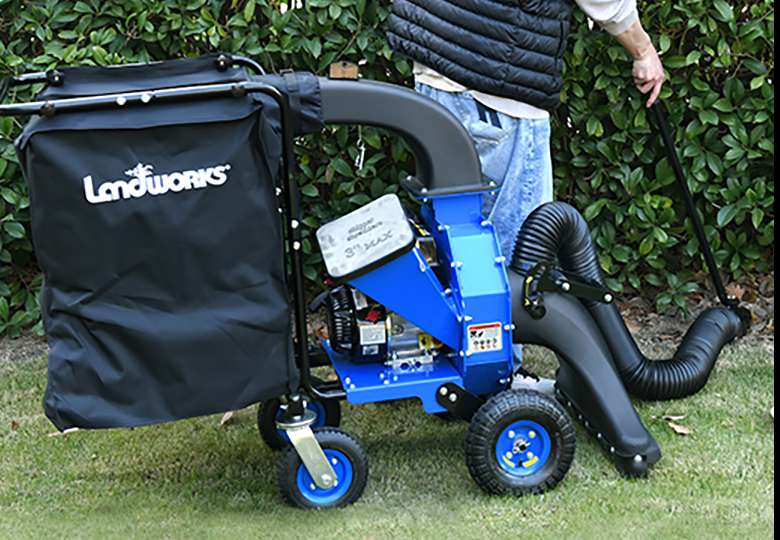
A leaf vacuum is a machine designed to collect leaves, grass clippings, light branches, and similar debris by suction rather than displacement. Unlike blowers, which push debris into piles, a leaf vacuum removes material from the area entirely and stores it in a bag, hopper, or trailer for disposal or reuse.
In professional use, leaf vacuum equipment is typically powered by gasoline engines or heavy-duty commercial engines and built with reinforced impellers, wide intake nozzles, and high airflow capacity. Many designs also incorporate shredding or chipping mechanisms that reduce debris volume before collection, allowing operators to work longer without stopping to unload.
The practical value of a leaf vacuum lies in predictability. Once debris is collected, the job is done—no secondary cleanup, no wind blowing piles back across the site, and no repeated passes over the same ground.
What Can a Leaf Vacuum Pick Up?
Leaf vacuum capability depends on airflow strength, impeller durability, and intake design. The table below summarizes common debris types and handling considerations.
| Debris Type | Typical Difficulty | Key Design Requirement | Notes |
| Grass clippings | Low | Stable airflow | Lightweight, easy to collect |
| Pine needles | Medium | Smooth intake, strong airflow | Needles interlock easily |
| Acorns & mixed debris | Medium–High | Steel impeller | Impact resistance matters |
| Wet leaves | High | Wide hose, efficient airflow | Moisture increases weight |
A well-designed leaf vacuum cleaner can handle all of these materials, but performance varies significantly between light-duty and professional-grade equipment.
How Leaf Vacuum Equipment Works in Practice
At its core, a leaf vacuum relies on controlled airflow. An engine-driven impeller generates suction at the intake, drawing debris into the system. As leaves and debris travel through the housing, they may pass through cutting edges or shredding components before reaching the collection container.
In real working conditions, performance is shaped by more than raw engine power. Hose diameter, intake design, airflow balance, and impeller durability all affect how smoothly debris moves through the system. Wet leaves, for example, behave very differently from dry ones.
A well-designed leaf vacuum maintains airflow even when material is heavy, damp, or mixed with small twigs.For operators, this means fewer clogs, less downtime, and more predictable daily output—especially important in commercial contracts where time directly translates to cost.
Leaf Vacuum Airflow, Impeller, and Collection Design
Airflow System
Airflow is the foundation of leaf vacuum performance. High airflow volume allows the machine to lift heavier debris and transport it without stalling. Balanced airflow also ensures that material does not drop out of suspension inside the hose or housing, which is a common cause of clogs.
Impeller Design
The impeller is the component that moves air through the system. Larger-diameter impellers generally move more air at lower rotational speeds, improving efficiency and durability. In professional leaf vacuum equipment, steel impellers are often preferred for their resistance to impact from small stones, acorns, or branches.
Impeller Materials
Steel impellers offer strength and longevity in demanding environments, while aluminum impellers reduce overall machine weight. The choice depends on how harsh the operating conditions are and how often the machine is expected to encounter hard debris.
Hose and Intake Design
Hose diameter and intake shape play a major role in usability. Wider hoses reduce the risk of clogging and handle wet leaves more effectively. A well-designed intake allows debris to enter smoothly without excessive turbulence.
Collection System
Leaf vacuum machines collect debris in bags, hoppers, or trailers. Bag-based systems are compact and easy to handle, while trailer-based systems support higher volumes and fewer unloading cycles. Steep dump angles and rigid frames help ensure that material unloads completely.
Where Leaf Vacuum Equipment Is Commonly Used
Leaf vacuum machines are used across a wide range of industries, often in environments where manual cleanup would be impractical or inefficient.
Landscaping and Grounds Maintenance
Professional landscapers rely on leaf vacuum equipment for large gardens, residential communities, campuses, and commercial properties. Instead of raking or repeatedly blowing debris into piles, a leaf vacuum allows crews to clean and collect in a single pass, producing a visibly finished result.
Municipal and Street Maintenance
Cities and towns use leaf vacuum machines to clear streets, sidewalks, and public spaces, particularly during seasonal leaf fall. Efficient collection helps prevent storm drain blockages and reduces the risk of localized flooding. In this context, reliability and high-volume capacity matter more than portability.
Agriculture and Orchards
In agricultural settings, leaf vacuum equipment is used to manage orchard debris, fallen leaves, and light pruning waste. Clean ground conditions help reduce pests, improve access, and support more efficient field operations.
Industrial and Facility Maintenance
Industrial sites often deal with mixed debris, including organic matter, packaging waste, and dust. A leaf vacuum provides controlled collection without spreading debris across large paved areas, supporting safer and cleaner work environments.
Types of Leaf Vacuum by Configuration and Power Source
To make the differences clearer, the table below summarizes the most common leaf vacuum configurations and power options used in professional environments.
Walk-behind leaf vacuum machines are designed for controlled operation in gardens, parks, orchards, and medium-sized properties. Operators guide the machine directly, allowing precise cleanup around trees, paths, and obstacles. These machines often balance maneuverability with sufficient power for daily professional use.
Tow-behind leaf vacuum equipment attaches to tractors or utility vehicles. This configuration allows operators to cover large areas efficiently while carrying greater collection capacity. Tow-behind designs are common on farms, estates, and large landscaped grounds.
PTO-driven leaf vacuum machines use tractor power instead of a dedicated engine. This setup reduces fuel redundancy and is well suited to agricultural environments where tractors are already in use.
Gas-powered leaf vacuum machines are more self-contained and flexible, making them easier to deploy across different sites without relying on additional equipment.
Leaf Vacuum Configuration Comparison
To make the differences clearer, the table below summarizes the most common leaf vacuum configurations and power options used in professional environments.
| Category | Typical Configuration | Power Source | Best-Suited Applications | Key Strengths | Limitations |
| Walk-behind leaf vacuum | Push or self-propelled | Gas-powered engine | Gardens, parks, orchards, campuses | High maneuverability, precise control | Limited collection capacity |
| Tow-behind leaf vacuum | Tractor or UTV towed | Gas-powered engine | Large yards, farms, estates | High capacity, efficient coverage | Requires towing vehicle |
| PTO-driven leaf vacuum | Tractor-mounted | Tractor PTO | Agricultural and rural maintenance | Fuel efficiency, strong continuous power | Dependent on tractor availability |
| Trailer / vehicle-based | Trailer or truck-mounted | Gas or diesel engine | Municipal and industrial cleanup | Very high throughput | Larger footprint, higher cost |
Key Design Factors That Affect Leaf Vacuum Performance
Choosing a leaf vacuum is not just about size. Several design details have a direct impact on long-term performance.
Impeller strength and diameter determine how well the machine handles mixed debris. Steel impellers are preferred in professional environments due to their resistance to impact and wear.
Airflow efficiency affects how easily debris moves through the system. Higher airflow reduces clogging and improves performance with wet material.
Collection volume and dump design influence productivity. Larger bags or hoppers reduce unloading frequency, while steep dump angles ensure complete discharge.
Ease of operation—including self-propelled movement or towing compatibility—directly affects operator fatigue and daily output.
Environmental and Operational Benefits of Using a Leaf Vacuum
Leaf vacuum equipment supports cleaner, more sustainable operations. Collected leaves and organic debris can be composted or reused as mulch instead of being sent to landfill. Shredding further reduces waste volume and transportation requirements.
Operationally, leaf vacuum machines reduce manual labor, improve safety by keeping surfaces clear, and deliver consistent results regardless of wind or terrain conditions. Over time, these benefits often outweigh the initial equipment investment.
How to Choose the Right Leaf Vacuum for Your Operation
Selecting a leaf vacuum becomes much easier when decision factors are compared side by side. The following table highlights how different usage conditions influence equipment choice.
| Decision Factor | Small Gardens & Light Use | Large Yards & Commercial Use |
| Working area size | Limited, segmented | Wide, open spaces |
| Recommended type | Walk-behind leaf vacuum | Tow-behind or PTO leaf vacuum |
| Debris volume | Low to moderate | High, continuous |
| Unloading frequency | Frequent but quick | Infrequent, high-volume dumps |
| Operator priority | Maneuverability | Productivity and capacity |
Maintenance Considerations for Long-Term Reliability
Routine inspection of impellers, hoses, and fasteners helps prevent unexpected failures. Cleaning the system after handling wet debris reduces corrosion and buildup. Engine maintenance should follow manufacturer schedules, with particular attention to air filtration and cooling systems.
Leaf Blower vs Leaf Vacuum
Although leaf blowers and leaf vacuum machines are often compared, they serve different roles in debris management. The table below outlines their functional differences.
| Aspect | Leaf Blower | Leaf Vacuum |
| Primary function | Moves debris | Collects and removes debris |
| End result | Debris relocated | Area fully cleaned |
| Labor requirement | Often requires follow-up | One-step cleanup |
| Waste handling | No collection | Bag, hopper, or trailer collection |
| Best use case | Initial clearing | Final cleanup and disposal |
In professional workflows, blowers are useful for preparation, while the leaf vacuum is the tool that completes the job.
Leaf Vacuum vs Mulcher
Leaf vacuum and mulcher equipment overlap in some applications but are designed with different priorities. The comparison below clarifies where each excels.
| Aspect | Leaf Vacuum | Mulcher |
| Core purpose | Collects debris | Reduces material size |
| Output | Collected waste | Mulch or chips |
| Waste removal | Yes | No |
| Best applications | Cleanup and disposal | Reuse of organic material |
| Combined systems | Vacuum + chipper available | Limited collection capability |
Machines that combine vacuuming and mulching functions provide added efficiency where both cleanup and waste reuse are required.
Explore Intradin's Professional Leaf Vacuum Solutions
Intradin develops professional leaf vacuum equipment designed for landscaping, agricultural, and outdoor maintenance applications. Its product range covers walk-behind, tow-behind, and vacuum-based solutions built for durability, efficiency, and real-world operating conditions.
The LBV221 Walk-Behind Leaf Vacuum and Chipper combines leaf collection and branch chipping in a compact, self-propelled design. It is well suited for landscapers, orchard owners, and maintenance teams that need efficient cleanup without excessive dust or manual handling.
For larger areas, Intradin also offers tow-behind leaf blower and leaf vacuum options, including models designed for high airflow output, long operating cycles, and large collection capacity. These machines are engineered to handle demanding outdoor environments while maintaining consistent performance across seasons.
Frequently Asked Questions
Can a leaf vacuum replace manual raking entirely?
In most professional environments, yes. Leaf vacuum machines dramatically reduce manual labor requirements.
Is a leaf vacuum suitable for uneven terrain?
Many designs handle uneven ground well, especially walk-behind and tow-behind configurations with large wheels.
How much volume reduction can shredding provide?
Shredding can reduce leaf volume by up to 80–90%, depending on material and moisture content.