











What Is a Leaf Vacuum and Blower Combo?
A leaf vacuum and blower combo is a multi-functional outdoor power equipment system that integrates blowing, vacuuming, mulching, and collection capabilities into one robust unit. In blower mode, it generates strong airflow to move leaves, grass clippings, and light debris into manageable piles. Switching to vacuum mode, it sucks up the material, often passing it through sharp impellers or blades that shred it before depositing the reduced-volume mulch into a collection bag or hopper.For professional users, these machines go far beyond homeowner convenience tools. They are engineered for scalability: reducing crew size requirements, minimizing disposal trips, and handling mixed debris including wet leaves, twigs, pine needles, and occasional litter. Premium commercial models feature reinforced housings, high-torque motors (or engines), and ergonomic designs that support extended operation without excessive fatigue.Key components typically include adjustable nozzles, powerful impellers, large-capacity collection systems, and quick-switch mechanisms between modes. Many advanced units also offer variable speed controls, allowing operators to dial power precisely for different surfaces and conditions.
Why Leaf Vacuum & Blower Combos Matter in Professional Landscaping
In commercial operations, leaf management isn't seasonal decoration—it's a critical workflow that impacts profitability. During peak fall months, properties can accumulate massive volumes of leaves that, if left unmanaged, damage turf, create slip hazards, and lead to client complaints.Professional teams face several core challenges:
High labor costs: Manual raking or basic blowing is time-intensive and physically demanding.
Large area inefficiency: Covering acres daily requires equipment that maintains high productivity hour after hour.
Wet leaf handling: Rain-soaked leaves are heavier and more likely to clog lesser machines.
Debris diversity: Leaves mixed with twigs, acorns, and litter demand versatile, clog-resistant systems.
Logistics pressure: Transporting bulky waste increases fuel and disposal expenses.
Well-chosen leaf vacuum and blower combos deliver measurable ROI through faster job completion, reduced manpower needs, lower transport costs, and the production of valuable mulch that can be reused on-site or sold as a byproduct. Many operators report 30-50% time savings compared to traditional methods.
Key Performance Metrics in Leaf Vacuum and Blower Combo Reviews
When evaluating equipment for business use, focus shifts from subjective "ease of use" to quantifiable operational metrics. Here's what professionals should prioritize:
1. Airflow Power
Airflow is the foundation of productivity. Cubic Feet per Minute (CFM) measures volume of air moved, while velocity (MPH or m/s) indicates force. For commercial applications, high CFM excels at covering wide areas quickly, while strong velocity handles wet, matted leaves and moves material against wind.Key insight: CFM often proves more critical for overall daily output in large-scale operations. Top commercial models deliver 500+ CFM with velocities exceeding 180 MPH in blower mode and powerful suction in vacuum configuration.
2. Mulching Efficiency Ratio
Mulching reduces waste volume dramatically, directly cutting logistics expenses. Residential units might achieve 8:1 to 10:1 ratios, but professional-grade systems target 12:1 to 18:1 or better.Benefits include fewer truck loads, reduced landfill or composting fees, and faster decomposition when used as mulch. Metal impeller blades with multiple cutting edges deliver superior performance and longevity compared to plastic alternatives.
| Equipment Grade | Typical Mulching Ratio | Best For |
| Consumer | 8:1 - 10:1 | Small gardens, occasional use |
| Semi-Pro | 10:1 - 14:1 | Landscapers with multiple residential jobs |
| Commercial/Industrial | 14:1 - 18:1+ | Municipal, large estates, agriculture |
3. Collection Capacity & Workflow Continuity
Collection bag or hopper size determines how long a crew can operate before stopping. Walk-behind units often feature 30-100L bags, while tow-behind and truck-loader systems offer continuous flow or massive capacities exceeding several cubic yards.Minimizing downtime is crucial—every emptying cycle represents lost billable time.
4. Durability & Duty Cycle
Professional equipment must withstand daily operation for 3-8 hours across multiple days during peak season. Look for reinforced plastic or metal housings, brushless motors (in electric models), or commercial-grade engines with easy-access service points.
5. Maintenance & Blockage Resistance
Superior impeller design, wide intake paths, and tool-free access panels separate reliable performers from frustrating units. Quick-clean features and readily available spare parts minimize downtime when clogs inevitably occur with heavy wet debris.
Types of Leaf Vacuum & Blower Combos (B2B Breakdown)
Walk-Behind Leaf Vacuum Systems
Walk-behind models strike an excellent balance between maneuverability and capacity. Ideal for parks, residential estates, school grounds, and medium commercial properties, these units allow a single operator to navigate tight spaces while maintaining strong performance.Advantages include lower upfront cost, excellent visibility, and integrated collection bags that are easy to empty. Many feature self-propelled options for reduced operator fatigue. Limitations surface on very large properties where frequent emptying becomes inefficient. Popular in suburban landscaping fleets due to versatility across varied terrain.
Tow-Behind Leaf Vacuum Systems
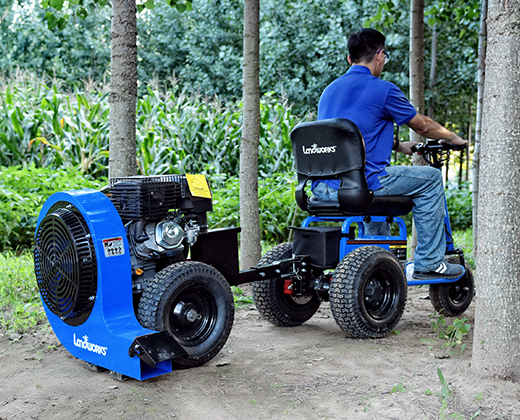
Tow-behind units attach to tractors, ATVs, or utility vehicles, making them perfect for farms, orchards, large private estates, and golf courses. These systems excel in high-volume applications where capacity and endurance matter most.With collection hoppers often exceeding 300-500+ liters (or direct truck loading), they dramatically reduce labor. Powerful PTO-driven or engine-powered blowers/vacuums handle large areas efficiently. The key benefit is scalability—operators can cover vast territories with minimal stops, making them cost-effective for seasonal peak workloads.
Truck Loader Leaf Vacuum Systems
Truck loader systems represent the pinnacle of efficiency for municipal street cleaning, highway maintenance, industrial sites, and large-scale operations. These powerful vacuum units mount on or tow alongside trucks, providing continuous debris loading directly into the vehicle.Advantages include unmatched throughput, ability to handle heavy mixed waste, and minimal manual intervention. They are engineered for all-day operation in demanding environments, often featuring industrial engines and sophisticated filtration systems to protect the vacuum components.
Real-World Applications in Professional Operations
Autumn Peak Season Operations
From September through November, leaf volume spikes dramatically. Professional teams need equipment that runs reliably for extended shifts. Combo systems allow crews to blow leaves from lawns and beds into rows, then vacuum and mulch efficiently, completing multiple properties per day.
Post-Storm Cleanup
Storms bring mixed debris that tests equipment limits. Heavy-duty combos with robust impellers and anti-clog technology clear branches, leaves, and litter quickly, helping restore safety and aesthetics rapidly.
Orchard & Agricultural Maintenance
In orchards and farms, fallen leaves and debris management prevents disease and maintains clean working areas. Tow-behind systems shine here, covering rows efficiently while producing mulch that can benefit soil health.
Municipal Cleaning Services
Cities and towns rely on truck-loader systems for streets, sidewalks, and public spaces. These machines handle everything from seasonal leaves to year-round litter, supporting public safety and cleanliness mandates.
How to Choose the Right Leaf Vacuum & Blower Combo
Selecting the optimal system requires careful assessment of your specific needs:
Step 1: Define Operation Scale
For areas under 1,000 m², compact walk-behind units suffice. Properties between 1,000–5,000 m² benefit from robust walk-behind or entry-level tow-behind models. Larger operations (5,000 m²+) typically require dedicated tow-behind or truck loader systems.
Step 2: Identify Debris Conditions
Dry leaves are manageable by most units. Wet or compacted conditions demand high suction power and optimized airflow paths. Mixed waste scenarios call for heavy-duty commercial designs with strong shredding capability.
Step 3: Evaluate Total Cost of Ownership
Beyond purchase price, factor in fuel/electricity use, maintenance intervals, parts availability, warranty coverage, and projected labor savings. A slightly higher initial investment often pays for itself quickly through productivity gains.
Step 4: OEM/ODM Capability (Critical for B2B Buyers)
Distributors and large fleet operators should prioritize manufacturers offering customization, including branding, performance tuning, and compliance adaptations for different regions.
Maintenance Best Practices for Long-Term Performance
Proper care extends equipment life and maintains peak efficiency:
Clean intake and impeller areas daily after use, especially with wet material.
Inspect and sharpen/replace blades weekly during heavy seasons.
Avoid storing units with damp debris inside to prevent corrosion and mold.
Check hoses, seals, and filters regularly for wear.
Perform comprehensive pre-season servicing including lubrication and belt/chain adjustments.
Following manufacturer guidelines and using genuine parts ensures reliability throughout years of demanding service.
FAQ – Leaf Vacuum and Blower Combo Reviews
Q1: Are leaf blower vacuums suitable for commercial use?
Yes, but only industrial or heavy-duty commercial-grade models built for continuous high-volume operation. Consumer units typically lack the durability and capacity needed for professional workloads.
Q2: Can they handle wet leaves?
High-quality systems perform well with wet leaves when equipped with strong suction, optimized impeller designs, and anti-clog features. Always allow some drying time when possible for best results.
Q3: What is a good mulching ratio for professional use?
A minimum of 12:1 is recommended, with 14:1 to 18:1 preferred for maximum efficiency in reducing volume and disposal costs.
Q4: Which system is best for large farms?
Tow-behind leaf vacuum systems are usually the most cost-effective and scalable choice, offering high capacity and compatibility with existing tractors or vehicles.
About Intradin – Professional Leaf Vacuum & Blower Manufacturer
In the competitive professional landscaping and outdoor maintenance equipment sector, Intradin stands out as a specialized manufacturer dedicated to commercial-grade leaf vacuum and blower systems. With a focus on industrial yard maintenance, agriculture, and municipal applications, Intradin engineers equipment that delivers reliable performance under demanding real-world conditions.
Product Categories
Walk-Behind Leaf Vacuum Systems – Perfect for parks, residential estates, and medium-scale operations requiring agility and solid collection capacity.
Tow-Behind Leaf Vacuum Systems – Built for farms, orchards, and expansive landscapes where high volume and extended runtime are essential.
Truck Loader Systems – Optimized for municipal, highway, and large industrial cleaning with continuous high-efficiency loading.
OEM / ODM Manufacturing Services
Intradin provides flexible customization solutions for global partners, including structural modifications, airflow and impeller optimization, private label production, and adaptation to regional standards and regulations.
Why Intradin
Deep expertise specifically in professional outdoor vacuum and blower technology.
Equipment engineered explicitly for heavy-duty, long-duty-cycle commercial use.
Focus on clog resistance, ease of maintenance, and operational efficiency.
Scalable manufacturing capacity supporting worldwide distribution networks.