











What Is Mulching Ratio in a Leaf Vacuum Cleaner?
Mulching ratio refers to the volume reduction achieved after leaves and organic debris pass through the vacuum's shredding system. It is typically expressed as a ratio such as 16:1, meaning 16 units of loose leaves are reduced to 1 unit of finely shredded mulch. This metric is fundamental for commercial users because it directly influences how much material can be processed and transported efficiently.For example, a machine with a 20:1 ratio converts 20 cubic feet of bulky leaves into just 1 cubic foot of compact mulch. Higher ratios translate into fewer hopper emptying stops, reduced truck loading cycles, lower labor hours spent on disposal, and significantly decreased transportation and landfill costs. In peak autumn seasons, when properties generate massive debris volumes, even small improvements in mulching ratio can yield substantial savings across an entire fleet.
Why Shredding Efficiency Matters More Than Advertised Mulching Ratio
Many buyers focus exclusively on the advertised mulching ratio number, but experienced professionals understand that real-world shredding efficiency determines actual daily productivity. Two machines claiming the same 20:1 ratio can produce dramatically different results when facing wet leaves, matted pine needles, small twigs, acorns, or mixed debris commonly encountered on commercial sites.High shredding efficiency delivers uniform particle size that packs better in collection bags, maintains continuous airflow without clogging, and preserves strong vacuum performance throughout the workday. Inconsistent shredding leads to larger chunks that fill hoppers faster, cause blockages, and require more frequent maintenance. The best commercial leaf vacuums combine impressive mulching ratios with reliable field performance across varying conditions, ensuring operators spend more time collecting and less time troubleshooting or unloading.The key takeaway is that the ideal machine balances high mulching ratio with consistent shredding efficiency. This combination maximizes volume reduction while minimizing downtime and maintenance needs in demanding professional applications.
Factors That Affect Mulching Ratio and Shredding Performance
Impeller Design
The impeller serves as both the suction generator and the primary shredding mechanism. Commercial-grade steel impellers significantly outperform lightweight plastic designs by maintaining blade sharpness over time, handling occasional twigs and small branches without damage, and generating stronger, more consistent airflow. Reinforced construction ensures reliable performance across thousands of operating hours, making them the preferred choice for fleet operators who cannot afford frequent replacements or breakdowns during peak seasons.
Blade Configuration
The number and design of cutting surfaces play a crucial role in shredding quality. Single-blade systems offer basic performance but struggle with varied debris. Dual-blade configurations improve results, while multi-edge impellers with optimized angles deliver superior shredding efficiency. These advanced designs create finer, more uniform mulch that compacts better and decomposes faster when used as ground cover or compost.
Airflow (CFM)
Higher sustained airflow ensures debris moves continuously into the shredding chamber rather than accumulating and causing uneven processing. Low airflow often leads to blockages, partial shredding, and reduced overall collection speed. Professional systems balance high CFM with intelligent ducting to maintain both strong suction and effective mulching even as collection bags fill.
Debris Type
Different materials respond differently to shredding. Dry leaves process easily, while wet leaves are heavier and more prone to clumping. Pine needles interlock and require strong airflow, acorns and small twigs demand robust impeller strength, and grass clippings can be straightforward but voluminous. Commercial machines engineered for mixed debris maintain better mulching ratios across these varied conditions compared to consumer models optimized primarily for dry leaves.
Commercial Landscaping Applications: Why Mulching Ratio Impacts Profitability
In real-world operations managing parks, golf courses, HOA communities, and municipal streets, mulching ratio directly affects bottom-line results. Many contractors operating these properties also utilize lawn sweeper wholesale equipment and wood chipper wholesale solutions as complementary tools for seasonal debris management. Higher ratios mean fewer stops to empty hoppers, allowing crews to maintain momentum and complete more properties per shift. For instance, a 10:1 system might require emptying every 15 minutes on heavy jobs, while a 20:1 or 30:1 model extends intervals significantly, reducing labor time spent on non-productive tasks.Reduced transportation costs represent another major advantage. More shredded material fits into collection bags, dump trailers, and compost containers, lowering fuel consumption and disposal fees. Crew productivity increases as operators focus on collection rather than repeated unloading, leading to higher daily billable hours and improved customer satisfaction through faster project completion and cleaner results.
Ideal Mulching Ratios for Different Commercial Applications
| Application | Recommended Ratio |
| Residential landscaping | 10:1 – 15:1 |
| Property maintenance contractors | 15:1 – 20:1 |
| Golf courses | 20:1 – 25:1 |
| Municipal cleanup | 20:1 – 30:1 |
| Large-scale farms | 20:1 – 30:1 |
| Orchard management | 20:1 – 30:1 |
For most professional operations, ratios below 15:1 often result in excessive dumping cycles and reduced efficiency. Targeting 20:1 or higher provides meaningful advantages in high-volume scenarios while maintaining reliable performance across mixed debris types.
How to Evaluate Shredding Efficiency During Supplier Selection
When sourcing leaf vacuum equipment, smart buyers go beyond advertised numbers to assess real capabilities. Request details about the debris types used during testing, including challenging materials like wet leaves, pine needles, small branches, and acorns. Ask for field test videos, customer references, and demonstration reports that reflect actual operating conditions rather than controlled laboratory environments.Impeller material is another critical factor — hardened steel or reinforced alloys offer superior longevity and performance compared to consumer-grade plastics. Maintenance considerations, including blade replacement cycles, impeller wear life, and service accessibility, also indicate long-term reliability and consistent shredding efficiency over multiple seasons.
Future Trends: Smarter Mulching Systems for Commercial Equipment
The commercial leaf vacuum market continues evolving toward high-efficiency impeller systems, larger collection capacities, reduced noise operation, and improved wet debris handling. Manufacturers are focusing on holistic performance improvements that maximize collection volume, shredding consistency, and overall fleet productivity. OEM and ODM customization allows distributors and large operators to develop tailored solutions that address specific regional challenges and performance requirements.
Frequently Asked Questions
What is a good mulching ratio for commercial leaf vacuums?
Most professional users prefer 20:1 to 30:1 ratios, depending on primary debris types and collection volumes. Higher ratios deliver clear advantages in large-scale operations.
Does a higher mulching ratio always mean better performance?
No. Actual shredding efficiency, sustained airflow, and robust impeller design are equally important for reliable real-world results.
Can leaf vacuums shred small twigs?
Commercial-grade units with strong steel impellers can typically process small branches and twigs alongside leaves, enhancing overall debris management capabilities.
Do wet leaves reduce mulching efficiency?
Yes. Wet leaves are heavier and more likely to clump, requiring stronger airflow and more robust shredding systems. Quality commercial machines handle them better than standard models.
Why Choose Intradin Leaf Vacuum Solutions for Commercial Debris Collection?
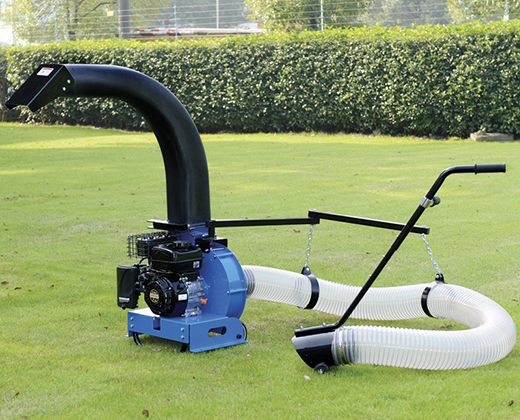
Autumn cleanup remains one of the most labor-intensive tasks for landscaping professionals, municipalities, farms, orchards, and property maintenance contractors. Intradin specializes in professional leaf vacuum systems engineered for demanding commercial environments.A leaf vacuum uses powerful suction to collect fallen leaves, grass clippings, pine needles, small twigs, and general outdoor debris. Material is drawn through a vacuum nozzle and processed through the shredding system before storage in a collection bag or hopper for easy disposal or composting. Unlike leaf blowers that simply move debris, Intradin vacuums collect and manage material efficiently.
Intradin Product Categories
Walk-Behind Leaf Vacuums — Best for residential communities, commercial landscapes, schools, and parks, offering excellent maneuverability and efficient shredding on varied terrain.
Tow-Behind Leaf Vacuums — Ideal for large estates, golf courses, farms, and orchards, delivering high-capacity collection and increased productivity with reduced labor needs.
Truck Loader Leaf Vacuums — Built for municipal operations, landscaping contractors, and roadside maintenance crews, providing large-volume handling and fast loading capabilities.
OEM & ODM Manufacturing Services
Intradin supports private label manufacturing, OEM production, ODM product development, customized impeller designs, collection capacity adjustments, branding solutions, and market-specific adaptations. Partners gain access to flexible solutions tailored to their unique business requirements.
Looking for a Commercial Leaf Vacuum Supplier?
Explore Intradin's complete range of walk-behind, tow-behind, and truck loader systems. Contact our team to request product catalogs, discuss OEM/ODM projects, compare commercial models, or receive bulk purchase quotations.Talk with Intradin today and discover how the right mulching system can improve productivity, reduce operating costs, and create greater value for your customers.This guide provides industry insights for commercial buyers. Contact Intradin for detailed specifications and customized recommendations.