Best Leaf Vacuum Cleaner for Small Yards: A Complete Buyer's Guide for Homeowners & Landscaping Businesses
Autumn transforms landscapes with beautiful colors, but it also brings one of the most tedious chores of the year: leaf cleanup. For homeowners, a small yard can quickly become overwhelmed by falling leaves, clogging narrow pathways and suffocating the lawn. Manual raking is not only back-breaking but incredibly inefficient, especially when overnight rain turns crisp leaves into a heavy, wet mat.For commercial landscaping services, small residential yards present a different challenge. The tight corners, garden beds, and limited access mean large, bulky equipment won't fit, driving up manual labor costs and eating into profit margins.Whether you are a homeowner trying to reclaim your weekend or a landscaping contractor looking to optimize your residential routes, a compact and efficient leaf vacuum cleaner can dramatically reduce cleanup time while improving debris collection efficiency. In this comprehensive guide, we will explore exactly how to choose the right equipment tailored for small yards, from suction power and mulching ratios to commercial-grade B2B solutions.
What Is a Leaf Vacuum Cleaner and How Does It Work?
Before investing in outdoor power equipment, it is essential to understand the mechanics. A leaf vacuum cleaner is specifically engineered to collect, reduce, and store organic yard waste, providing a seamless all-in-one cleanup solution.
How Leaf Vacuum Systems Work
At its core, a leaf vacuum operates on high-velocity fluid dynamics. A powerful engine drives a heavy-duty fan known as an impeller. This creates a massive suction airflow that pulls leaves, twigs, and grass clippings through the nozzle intake.Instead of just storing whole leaves, the debris passes directly through the spinning impeller blades, shredding it into tiny fragments (mulch). Finally, the compressed mulch is blown into a collection bag system or an attached hopper for easy disposal.Many buyers confuse leaf blowers with leaf vacuums. While some handheld models offer both, dedicated machines serve entirely different operational purposes.Table: Leaf Blower vs. Leaf Vacuum
| Function | Leaf Blower | Leaf Vacuum |
| Air Direction | Blows outward | Suctions inward |
| Main Use | Move leaves into piles | Collect and remove debris |
| Debris Collection | No | Yes |
| Mulching Capability | Limited to none | Yes (Highly efficient) |
Why Small Yards Need a Different Type of Leaf Vacuum
It is a common misconception that smaller properties require less powerful tools. In reality, maintaining a small yard often requires smarter, more specialized equipment. You cannot simply use a massive tractor-pulled vacuum in a 500-square-foot urban garden.Small residential yards are characterized by narrow pathways, delicate flower bed edging, uneven stepping stones, and limited storage space in garages or sheds. Furthermore, in densely populated neighborhoods, noise sensitivity is a major factor.Therefore, the core requirements for a small yard leaf vacuum are that it must be lightweight, compact, easy to maneuver, and require low maintenance, all without sacrificing wet leaf capability.
Common Problems Homeowners Face
| Problem | Impact on Yard Work |
| Wet leaves stick to grass | Hard to vacuum; clogs low-powered consumer machines. |
| Large machines are bulky | Poor maneuverability around fences, patios, and tight corners. |
| Small collection bags | Frequent emptying interruptions, slowing down the entire job. |
| Loud engines | Neighborhood noise complaints and HOA violations. |
Best Types of Leaf Vacuum Cleaners for Small Yards
When selecting the ideal leaf vacuum, you must match the machine's architecture to your property size and operational scale.
Walk-Behind Leaf Vacuums
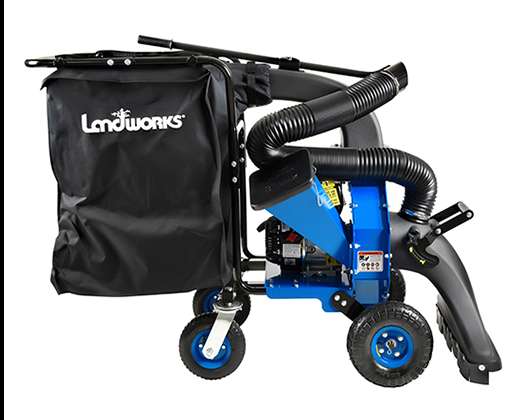
For small to medium residential properties, the walk-behind leaf vacuum is the undisputed champion. Operating similarly to a push lawnmower, these machines offer significantly stronger suction than handheld vacuums and feature much larger collection bags.
Tow-Behind Leaf Vacuums
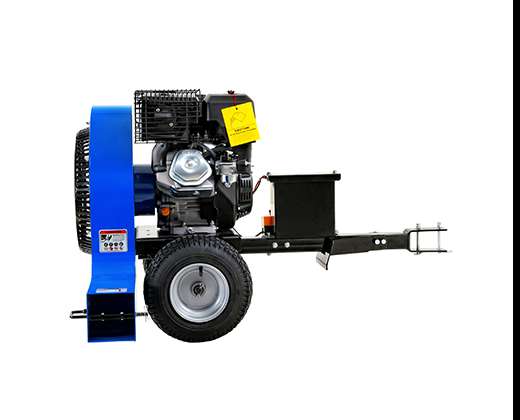
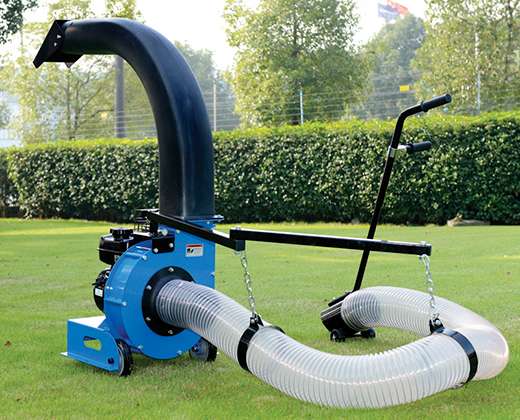
While typically associated with massive estates, compact tow-behind leaf vacuums are increasingly used by landscaping contractors who service entire neighborhoods of small yards.
- Best For: Larger residential properties, orchards, ranches, and commercial landscaping contractors.
Key Advantage: By attaching to an ATV or zero-turn mower, they offer unmatched efficiency, allowing a single operator to engage in long-term, continuous work across multiple properties without stopping to empty small bags.
Truck Loader Leaf Vacuums
How do contractors clear small yards quickly? They rake or blow the leaves to the curb, and use a truck loader leaf vacuum to suck the massive piles directly into a municipal dump truck.
Key Features to Look for in the Best Leaf Vacuum Cleaner
Whether you are buying for a single home or outfitting a commercial landscaping fleet, understanding engineering specifications is critical. Do not just look at the price tag; evaluate the machine based on these metrics.
Suction Power
Airspeed (MPH) is important, but CFM (Cubic Feet per Minute) is the true measure of a vacuum's capability. CFM determines the actual volume of air and debris the machine can pull at once. High CFM and airflow efficiency are what dictate strong wet leaf performance.Table: Recommended Airflow by Yard Size
| Yard Size / Application | Recommended Airflow (CFM) |
| Small Yard (Dry Leaves) | 300–500 CFM |
| Medium Yard (Mixed Debris) | 500–700 CFM |
| Commercial Use / Wet Leaves | 700+ CFM |
Mulching Ratio
The mulching ratio indicates how efficiently the impeller shreds the leaves. A high ratio (such as 16:1 or 18:1) means that 16 bags of raw leaves are reduced to just one bag of finely chopped mulch. This drastically reduces bag emptying frequency and provides nutrient-rich mulch with great compost advantages for your garden.
Bag Capacity
A powerful motor is useless if you have to stop every three minutes to empty the bag. Match the bag size to your property.Table: Bag Capacity Guide
| Bag Size | Best For |
| Small Bag (Under 1.5 Bushels) | Homeowners with small patios and light leaf drop. |
| Medium Bag (1.5 to 3 Bushels) | Weekly residential lawn maintenance. |
| Large Bag / Hopper (3+ Bushels) | Commercial landscaping crews and heavy autumn cleanup. |
Wet Leaf Handling Capability
Wet leaves after rainfall often clog low-powered consumer vacuums, especially in compact residential lawns where leaves mat down into the grass. To handle wet foliage, you need exceptional impeller strength (preferably steel, not plastic), an anti-clog airflow design, and a wide hose diameter to prevent sticky debris from bridging inside the chute.
Mobility and Storage
For small yards, storage is a premium. Look for walk-behind units with a foldable handle and a compact footprint. Transport convenience is also crucial for contractors who need to fit the machine onto crowded utility trailers.
Best Leaf Vacuum Cleaner for Different Users
There is no "one size fits all" in outdoor power equipment. Here is how to match the machine to your specific operational needs.
Best for Homeowners
For the average homeowner with a small yard, the priorities are low noise, lightweight design, and easy storage. A compact electric or small gas-powered walk-behind vacuum is ideal. It takes the strain off the back and folds up neatly in the corner of the garage.
Best for Landscaping Businesses
Time is money. Landscapers need extreme durability and all-day operation capability. A heavy-duty, self-propelled walk-behind vacuum with a steel impeller is required to survive daily abuse, effectively reducing labor costs by clearing residential properties in minutes rather than hours.
Best for Property Managers & HOAs
Homeowner Associations (HOAs) require fast cleanup that maintains high curb appeal without disturbing residents. A quiet but powerful walk-behind unit ensures seasonal maintenance is handled efficiently, keeping neighborhood sidewalks and common areas pristine.
Best for Orchards and Farms
While generally dealing with larger areas, small family orchards require machines that can handle leaves plus twig cleanup over uneven terrain. A rugged tow-behind system hitched to a utility vehicle such as a landworks utility cart provides the heavy-duty collection needed for agricultural debris.
Common Mistakes When Buying a Leaf Vacuum for Small Yards
Avoid these costly purchasing errors, whether you are a first-time buyer or a procurement manager:
Mistake 1: Only looking at airspeed (MPH) instead of suction volume (CFM). High MPH moves leaves, but high CFM is required to actually collect them into a bag.
Mistake 2: Ignoring wet leaf conditions. Buying a machine with a plastic impeller will result in immediate clogs after the first autumn rain.
Mistake 3: Choosing a bag capacity that is too small. This results in exhausting, repetitive trips to the compost bin.
Mistake 4: Ignoring maintenance costs. Cheap machines often have proprietary filters or inaccessible impellers that cost a fortune in service fees.
Mistake 5: Buying equipment that is too heavy. A massive 200-pound non-propelled vacuum is impossible to maneuver in a tight 600-square-foot backyard.
Maintenance Tips to Extend Leaf Vacuum Lifespan
Protect your investment by adhering to a strict maintenance schedule. A well-maintained machine operates at peak CFM and prevents costly downtime.Table: Recommended Maintenance Schedule
| Maintenance Task | Frequency |
| Clean collection bag (Allow to dry) | After each use |
| Inspect impeller for debris/string | Weekly |
| Check & tighten housing bolts | Monthly |
| Engine maintenance (Oil/Spark plug) | Seasonal (Pre-Autumn) |
Pro Tip: Wet leaves leave behind an acidic sludge. Always clean the impeller chamber and ensure dry storage to prevent the steel components from rusting. For gas models, proper fuel management (using stabilizers) is essential before winter storage, while cordless models require indoor battery care.
How Landscaping Businesses Reduce Labor Costs with Efficient Leaf Vacuums
For B2B commercial landscaping operators, the transition from manual raking to mechanized vacuuming is purely about Return on Investment (ROI).When a landscaping crew services a dense neighborhood of small residential yards, manual cleanup requires a massive labor force. By deploying a commercial walk-behind or a truck loader vacuum, businesses experience immediate benefits: fewer workers needed per site, significantly faster cleanup times, lower fuel costs for transport, improved client satisfaction through immaculate lawns, and a higher daily job capacity.
Example Scenario: Neighborhood HOA Autumn Cleanup
| Cleanup Method | Crew Size | Time Required per Yard | Daily Job Capacity |
| Manual Raking & Bagging | 3 Workers | 1 Hour 15 Minutes | 18 Yards |
| Commercial Leaf Vacuum Cleanup | 1–2 Workers | 20 Minutes | 45+ Yards |
By cutting the time required per yard by more than 70%, landscapers can reallocate labor to other profitable tasks, making the equipment pay for itself within the first few weeks of autumn.
Why More Retailers Are Expanding Their Leaf Vacuum Product Lines
From a B2B distribution perspective, the outdoor power equipment market is shifting. Retailers and dealerships are noticing a massive trend: homeowners are buying more commercial-grade outdoor power equipment.Tired of replacing cheap plastic tools every two years, consumers are demanding durability. Simultaneously, the landscaping industry is experiencing rapid growth, increasing the demand for compact commercial equipment that fits on standard utility trailers.Retailers benefit immensely from offering multiple product categories—stocking walk-behinds for local homeowners, and tow-behinds or truck loaders for commercial contractors, and complementary lawn sweeper wholesale equipment for complete seasonal property maintenance solutions. This captures both the B2C weekend-warrior market and the high-margin B2B seasonal demand spikes.
Why Intradin Leaf Vacuums Are Built for Professional Yard Cleanup
When it comes to manufacturing reliable, high-performance outdoor power equipment, Intradin stands out as a global leader. We engineer leaf vacuums that bridge the gap between compact maneuverability for small yards and rugged commercial durability.
Professional Product Categories
| Product Type | Best Applications |
| Walk-Behind Vacuums | Residential lawns, tight HOA landscapes, & small commercial cleanup. |
| Tow-Behind Vacuums | Farms, orchards, parks, and large estate properties. |
| Truck Loader Systems | Municipal road cleaning, storm cleanup, & commercial fleet operations. |
Designed for Real Outdoor Working Conditions
Intradin equipment is not tested in sterile labs; it is built for the brutal reality of autumn. Our machines feature heavy-duty steel impellers designed to aggressively shred wet leaves, heavy grass clippings, and small branches. With robust wheel systems, they navigate uneven terrain effortlessly, making them ideal for both backyard corners and rugged roadside cleanup.
OEM & ODM Support for Global Buyers
For distributors, retailers, and global brands, Intradin offers comprehensive OEM & ODM support. We provide:
- Custom airflow systems tailored to regional foliage types.
- Branding customization for private-label dealership expansion.
- Deep dealer cooperation and joint product development.
Why Global Buyers Choose Intradin
With decades of manufacturing experience and dedicated B2B export support, Intradin ensures stable quality across every production run. Our customizable solutions and retailer-friendly cooperation models make us the preferred partner for businesses looking to dominate the outdoor power equipment market.
Upgrade Your Outdoor Equipment Lineup Today!
Looking for a reliable leaf vacuum supplier for residential or commercial markets?Explore Intradin's complete range of Walk-behind leaf vacuums, Tow-behind leaf vacuums, and Truck loader systems.Need OEM/ODM support for your market?
Contact Intradin today to discuss customized outdoor power equipment solutions and secure your inventory before the next seasonal spike!
FAQ About Leaf Vacuum Cleaners for Small Yards
What is the best leaf vacuum for wet leaves?
The best leaf vacuum for wet leaves is a walk-behind or truck loader model featuring a high CFM rating (700+) and a heavy-duty, serrated steel impeller. Plastic impellers lack the torque and durability required to shred wet, matted foliage without clogging.
Can a leaf vacuum pick up small branches?
Yes, provided it is a commercial-grade machine. High-end walk-behind and tow-behind vacuums with steel impellers can easily chip and mulch small twigs, pinecones, and light branches. However, large, thick branches should be cleared manually to prevent impeller damage.
Are leaf vacuums better than leaf blowers?
They serve different purposes. Leaf blowers are excellent for rapidly moving dry leaves out of garden beds or creating large piles. Leaf vacuums are "better" when the goal is completely removing the debris from the property, as they collect, mulch, and bag the leaves, eliminating the need for manual bagging.
What size leaf vacuum is best for small yards?
A compact, self-propelled walk-behind leaf vacuum is ideal for small yards. It provides the strong suction (300-500 CFM) needed for thorough cleaning while remaining narrow enough to maneuver around tight fences, patios, and garden borders.
How often should leaf vacuum bags be emptied?
This depends on your mulching ratio and bag size. For a standard small yard with a machine offering a 16:1 mulching ratio, a 2-bushel bag usually only needs to be emptied once or twice per mowing session. Empty the bag when you feel a noticeable drop in suction power.
What is the ideal mulch ratio for homeowners?
An ideal mulch ratio for residential use is between 10:1 and 16:1. This ratio shreds the leaves finely enough to drastically reduce waste volume and create excellent garden compost, without turning the material into a fine dust that escapes the collection bag.