











Why Wet Leaves Are Much Harder to Collect Than Dry Leaves
Many equipment buyers assume that if a machine can handle dry leaves effectively, it will perform equally well with wet material. In reality, wet leaves present multiple technical challenges that separate consumer-grade tools from true commercial performers. Understanding these differences helps buyers avoid costly mistakes and select equipment that delivers consistent results throughout variable weather conditions.
Wet Leaves Weight Increase
When leaves absorb moisture, their weight can increase dramatically — often by 200% to 500% compared to dry conditions. This added mass demands significantly higher suction power and stronger airflow to lift and transport the material through the intake system. Machines with insufficient CFM or weak vacuum pressure struggle, resulting in incomplete pickup and frustrated operators who must resort to manual raking or multiple passes.
Wet Leaves Easily Adhere to Surfaces
Moisture causes leaves to stick stubbornly to grass blades, pavement, curbs, and drainage areas. This adhesion requires not just strong suction but also optimized nozzle design and airflow dynamics to break the bond between debris and the ground. Commercial units with adjustable intake heights and aggressive airflow patterns excel here, while lighter models often leave behind patches of matted material that require additional labor.
Clogging Risk in Intake and Collection Systems
Wet leaves tend to form dense clumps that clog intake nozzles, hoses, and collection pathways far more readily than dry material. These blockages interrupt workflow, reduce suction, and can damage components if not addressed promptly. Professional systems incorporate wider intake paths, anti-clog impeller designs, and easy-access cleaning points to minimize downtime even when working in damp conditions after rain or morning dew.
Need for Stronger Shredding Systems
Wet leaves have greater fiber toughness and flexibility, making them resistant to shredding by standard plastic impellers. These components can tangle, lose efficiency, or fail prematurely. Industrial-grade steel or reinforced alloy impellers maintain cutting performance and generate the consistent airflow needed to process heavy, damp material without performance degradation.
What Makes a Leaf Vacuum Effective for Wet Debris?
High Suction Power
Commercial-grade equipment emphasizes sustained high airflow (CFM) and vacuum pressure rather than peak numbers alone. Strong, consistent suction is essential for lifting heavier wet material from varied surfaces while maintaining performance as the collection system fills. Professional models balance these metrics to handle real-world conditions without excessive power consumption or noise.
| Condition | Recommended Suction Level |
| Dry leaves | Standard |
| Damp leaves | High |
| Wet leaves | Commercial-grade |
| Wet leaves + mixed debris | Heavy-duty system |
Large-Diameter Intake Nozzle
Wider intake nozzles reduce clogging risk and improve throughput for bulky wet material. Commercial designs often feature adjustable or specialized nozzles that maintain optimal ground clearance while maximizing airflow, allowing efficient pickup from grass, pavement, and uneven terrain without constant manual intervention.
Metal Impeller Shredding System
Robust metal impellers provide the mechanical strength and cutting efficiency needed for wet debris. Unlike plastic alternatives that can deform or tangle, hardened steel components maintain sharpness and balance, ensuring consistent mulching and airflow even under heavy loads.
High-Capacity Collection System
Professional operators prioritize working time and minimal interruptions over machine weight. Larger hoppers and efficient collection designs extend operational cycles, reducing the frequency of emptying stops that become particularly cumbersome with heavy, wet material.
Can Leaf Vacuums Pick Up Other Wet Debris Besides Leaves?
Quality commercial leaf vacuums handle a wide range of wet debris beyond just leaves, though performance varies significantly by machine grade. Professional models excel with mixed loads that include grass clippings, pine needles, small twigs, and light litter, making them versatile tools for year-round maintenance rather than seasonal specialists.
| Debris Type | Consumer Models | Commercial Models |
| Wet Leaves | Limited | Excellent |
| Grass Clippings | Moderate | Excellent |
| Pine Needles | Moderate | Excellent |
| Small Twigs | Limited | Excellent |
| Storm Debris | Poor | Good |
| Litter & Paper Cups | Moderate | Excellent |
Landscaping service providers routinely handle parks, commercial properties, schools, golf courses, orchards, and farms where mixed wet debris is common. Many contractors also utilize lawn sweeper wholesale equipment and wood chipper wholesale machines as part of a complete debris collection and landscape maintenance program. Effective machines streamline these tasks by collecting everything from fallen leaves to post-event litter in efficient passes.
Best Leaf Vacuum Types for Wet Leaves and Heavy Debris
Walk-Behind Leaf Vacuums
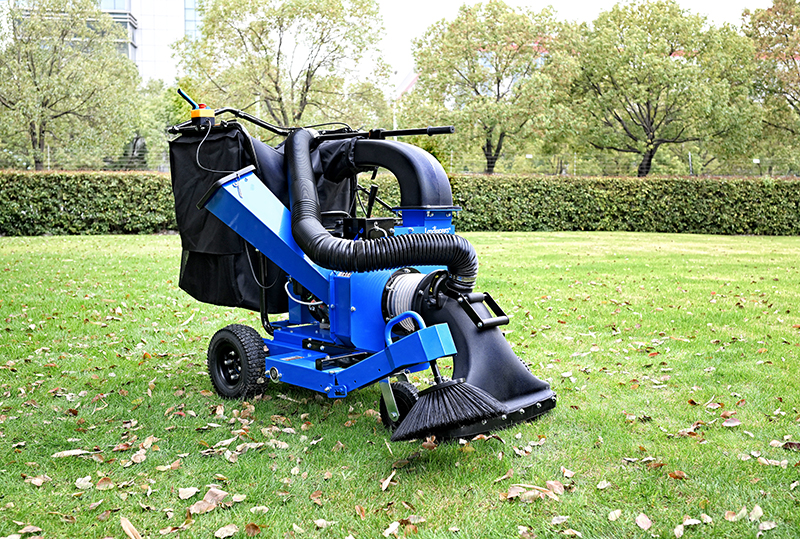
Walk-behind models offer excellent maneuverability and strong wet leaf handling for landscapers and property maintenance crews working on medium to large sites. Their balanced design and robust suction systems make them practical for daily use around buildings, flower beds, and uneven terrain where larger machines cannot operate effectively.
Tow-Behind Leaf Vacuums
For orchards, farms, ranches, and expansive estates, tow-behind systems provide high-capacity collection and extended runtime. Tractor or ATV integration allows crews to cover large areas efficiently while managing the heavier loads associated with wet conditions.
Truck Loader Leaf Vacuums
Municipal contractors and commercial cleanup teams rely on truck loader systems for maximum airflow and high-volume processing. These units excel at long-distance transport and bulk collection of wet storm debris, making them indispensable for large-scale operations.
How Landscaping Companies Evaluate Wet Leaf Vacuum Performance
Professional procurement decisions focus on measurable outcomes rather than specifications alone. Key metrics include productivity per hour (acres or square meters covered), downtime frequency due to clogging, fuel or power efficiency, and overall labor savings. A single operator with the right commercial vacuum can often replace multiple workers using manual methods or inferior equipment, delivering substantial cost reductions.
| Evaluation Metric | Importance |
| Suction Power | High |
| Mulching Efficiency | High |
| Collection Capacity | High |
| Fuel Consumption | Medium |
| Noise Level | Medium |
| Ease of Maintenance | High |
Wet Leaves vs Dry Leaves: Performance Expectations
Many operators underestimate the differences between wet and dry conditions. Wet leaves are heavier, more adhesive, harder to shred, and significantly more likely to cause clogs. Commercial buyers should prioritize machines engineered specifically for these challenges rather than assuming standard models will suffice across all seasons.
| Factor | Dry Leaves | Wet Leaves |
| Weight | Low | High |
| Pickup Difficulty | Easy | Difficult |
| Shredding Requirement | Medium | High |
| Clogging Risk | Low | High |
| Suction Requirement | Medium | High |
For operations that frequently encounter wet conditions, selection criteria should emphasize suction performance, impeller design, collection capacity, and maintenance ease rather than price alone.
Frequently Asked Questions About Wet Leaf Vacuuming
Can all leaf vacuums pick up wet leaves?
No. Most consumer models are optimized primarily for dry leaves and struggle with wet material. Commercial-grade systems are specifically engineered to handle damp and heavy debris effectively.
What is the best type of leaf vacuum for wet leaves?
Commercial walk-behind, tow-behind, and truck loader models generally perform best due to their superior airflow, robust impellers, and high-capacity designs.
Will wet leaves damage a leaf vacuum?
Well-designed commercial equipment handles wet leaves without damage when properly maintained. Regular cleaning of intakes, ducts, and collection systems prevents buildup and extends component life.
Can leaf vacuums collect storm debris?
Yes, quality commercial units can manage small branches, pine needles, leaves, grass clippings, and light litter associated with storms, provided the material falls within the machine's specified capabilities.
Why Landscaping Professionals Choose Intradin Leaf Vacuum Solutions
At Intradin, we specialize in commercial-grade leaf vacuum solutions designed for demanding outdoor cleanup applications. Our equipment helps landscaping companies, retailers, municipalities, orchards, farms, ranches, and property maintenance contractors efficiently collect wet leaves, dry leaves, grass clippings, small branches, storm debris, litter, and organic waste.Unlike consumer-grade machines, Intradin products are built for large-scale seasonal cleanup and professional operations where reliability and efficiency are essential.
Intradin Product Categories
Walk-Behind Leaf Vacuums — Best for landscaping companies, property maintenance, parks, and gardens with excellent maneuverability, strong suction, and efficient shredding.
Tow-Behind Leaf Vacuums — Ideal for farms, orchards, ranches, and large estates offering high-capacity collection, extended operating time, and reduced labor requirements.
Truck Loader Leaf Vacuums — Built for municipal cleanup, commercial contractors, and storm recovery with maximum airflow and high-volume loading capabilities.
OEM & ODM Manufacturing Services
Intradin supports OEM manufacturing, ODM product development, private label programs, customized collection capacity, engine configurations, impeller designs, and market-specific adaptations. Our engineering team works closely with partners to create tailored solutions that address unique operational challenges.