











When it comes to moving materials efficiently outdoors, choosing the right tool can dramatically impact productivity, labor costs, and operator comfort. The debate around electric wagon vs electric utility cart vs trolley differences is particularly relevant for homeowners, farmers, and professional landscapers seeking the best outdoor transport equipment comparison. Each option serves distinct purposes, from lightweight garden tasks to heavy-duty commercial operations. This guide breaks down the key distinctions, real-world applications, and ROI considerations to help you determine which solution best fits your needs — whether you're managing a backyard garden, a working farm, or a full-scale landscaping business.
Quick Answer: What Is the Difference Between an Electric Wagon, Electric Utility Cart, and Trolley?
An electric wagon is a battery-powered transport tool designed for outdoor tasks such as gardening, landscaping, and farming. An electric utility cart offers greater carrying capacity and is typically used in commercial or industrial environments. A trolley is usually a manually operated cart designed for moving lighter loads on smooth surfaces. The best choice depends on terrain conditions, load requirements, and operational scale.
| Equipment | Power Source | Load Capacity | Terrain Capability | Best Use |
|---|---|---|---|---|
| Electric Wagon | Battery Powered | Medium–High | Excellent | Landscaping, gardening, farms |
| Electric Utility Cart | Battery/Gas | High | Excellent | Commercial and industrial operations |
| Trolley | Manual | Low–Medium | Limited | Warehouses, flat surfaces |
Understanding these electric wagon vs utility cart and utility cart vs trolley differences helps buyers select equipment that maximizes efficiency without over-investing.
What Is an Electric Wagon?
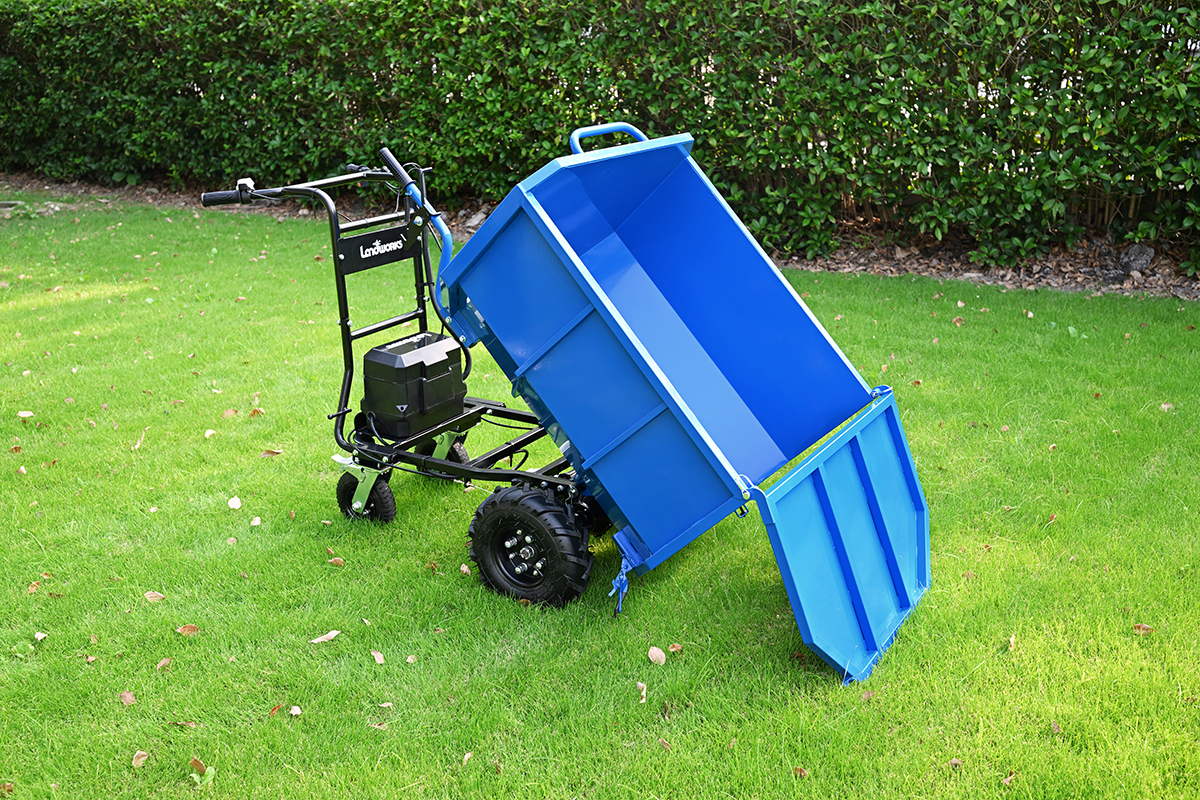
An electric wagon is a compact, battery-powered hauling device built specifically for outdoor use. It combines the maneuverability of a traditional garden cart with the convenience of motorized assistance, making it a versatile choice for various outdoor environments. These wagons typically feature a sturdy frame, dump bed option, and controls that allow operators to move heavy loads with minimal physical effort. They are particularly popular in gardens, orchards, small farms, landscaping sites, and residential properties where flexibility and ease of use matter most. Unlike bulkier vehicles, electric wagons excel in tight spaces while still handling substantial loads like soil, mulch, tools, and harvested produce.
Typical Features of an Electric Wagon
Modern electric wagons come equipped with a reliable powered drive system, pneumatic or all-terrain tires for better traction, a compact turning radius ideal for navigating between garden beds or orchard rows, and moderate payload capacities ranging from 200 to 800 pounds depending on the model. Many include variable speed settings, reverse functionality, and long-lasting lithium-ion batteries.
Advantages
Operators appreciate the easy operation that reduces daily fatigue, lower overall labor requirements, and excellent maneuverability on grass, light slopes, and uneven ground. They strike an ideal balance between power and agility, making them suitable for both solo homeowners and small professional crews.
What Is an Electric Utility Cart?
Electric utility carts are larger, more robust versions designed for demanding commercial applications. These vehicles often resemble small motorized buggies with expansive cargo beds and are widely used in commercial landscaping, municipal maintenance, university campuses, resorts, and large ranches. While sharing the electric power concept with wagons, utility carts prioritize capacity and endurance over nimble handling. Many models offer options for passenger seating, extended battery ranges, and even gas-hybrid configurations for all-day heavy use.
Typical Features
Key characteristics include a significantly larger cargo bed, higher payload capacities often exceeding 1,000 pounds, longer operating ranges on a single charge, and multiple seating or configuration options. Heavy-duty frames, powerful motors, and advanced suspension systems allow them to tackle tougher jobs consistently.
Advantages
They deliver true commercial-grade performance, dramatically higher productivity for large-scale operations, and excellent suitability for expansive properties where moving substantial volumes of material is routine.
What Is a Trolley?
A trolley, often called a garden trolley or flatbed trolley, is typically a manual, non-powered cart designed for straightforward material movement. These simple platforms are common in warehouses, retail stores, greenhouses, and other controlled environments with flat, smooth surfaces.
Advantages
The primary benefits are their low purchase cost and minimal maintenance requirements. They require no batteries, fuel, or complex mechanics, making them an economical choice for light-duty, occasional use.
Limitations
However, trolleys demand full manual effort, perform poorly on rough or sloped terrain, and have limited outdoor applicability. They quickly become impractical for larger properties or heavy daily workloads where operator fatigue becomes a major concern.
Electric Wagon vs Electric Utility Cart vs Trolley: Side-by-Side Comparison
Here's a detailed breakdown to highlight the electric wagon vs electric utility cart vs trolley differences:
| Feature | Electric Wagon | Electric Utility Cart | Trolley |
|---|---|---|---|
| Power Assistance | Yes (Battery) | Yes (Battery/Gas) | No |
| Terrain Adaptability | Excellent | Excellent | Poor |
| Load Capacity | Medium-High | High | Low-Medium |
| Purchase Cost | Medium | High | Low |
| Operator Fatigue | Low | Low | High |
| Commercial Use | Yes | Yes | Limited |
| Residential Use | Excellent | Moderate | Moderate |
Which Equipment Is Best for Gardening?
For homeowners, garden maintenance crews, and estate managers, the electric wagon for landscaping and gardening typically offers the sweet spot. Its compact size and responsive handling make it perfect for weaving between flower beds, raised gardens, and tight pathways. Electric wagons shine when transporting soil, mulch, plants, tools, and harvested vegetables. They reduce strain on uneven lawns and gentle slopes while maintaining enough capacity for meaningful work sessions. For most gardening applications, electric wagons offer the best balance of maneuverability, carrying capacity, and ease of use. They are particularly effective for transporting soil, mulch, plants, and gardening tools across lawns and uneven terrain.
Which Equipment Is Best for Farming and Orchards?
Farming and orchard operations involve frequent movement of feed, fertilizer, harvest bins, irrigation parts, and tools. Terrain varies widely from dirt paths to grassy rows, making powered options preferable. Small orchards and family farms usually benefit most from an electric wagon's agility and sufficient capacity. Medium operations may still prefer wagons for cost-effectiveness, while large farms and ranches often upgrade to electric utility carts for their superior payload and range.
| Farm Size | Recommended Equipment |
|---|---|
| Small Orchard | Electric Wagon |
| Medium Farm | Electric Wagon |
| Large Farm / Ranch | Electric Utility Cart |
Which Equipment Is Best for Landscaping Businesses?
Landscape contractors must balance productivity, labor costs, and job completion speed. The best transport equipment for landscaping business depends on operation scale.
Small Landscaping Crews
Smaller teams appreciate the affordability, versatility, and ease of an electric wagon. It handles daily mulch spreading, plant installation, and debris movement efficiently without requiring a large upfront investment.
Commercial Landscape Contractors
Larger crews tackling extensive projects often choose electric utility carts for their higher capacity and ability to support longer workdays across big commercial sites.
Material Movement Tasks
Both powered options excel at moving soil, stone, mulch, plants, and tools — core activities that consume significant time when done manually. Landscaping companies often choose electric wagons for flexibility and lower investment costs, while larger contractors may prefer electric utility carts for higher payload capacity and longer operating ranges.
Cost Comparison: Which Option Offers Better ROI?
Initial price is important, but long-term value matters more for serious users.
| Factor | Electric Wagon | Utility Cart | Trolley |
|---|---|---|---|
| Initial Cost | Medium | High | Low |
| Productivity | High | Very High | Low |
| Labor Savings | High | High | None |
| ROI Potential | High | High | Moderate |
For most landscaping businesses, farms, and property maintenance contractors, an electric wagon often delivers the best balance of performance and return on investment, especially when used regularly.
Beyond Transportation: Why Debris Collection Equipment Matters
Transportation solves only half the equation in outdoor maintenance. Gardens, parks, farms, and landscapes constantly generate fallen leaves, grass clippings, small branches, and storm debris that must be efficiently collected and removed. Without proper collection tools, even the best transport equipment sits idle while crews manually gather waste — a time-consuming and exhausting process.
Building a Complete Outdoor Maintenance System: Transport Equipment + Leaf Vacuum
Professional service providers achieve maximum efficiency by pairing transport solutions like electric powered wagon or utility cart with powerful leaf vacuums. The wagon or cart handles material delivery and waste removal, while the leaf vacuum manages fast collection.
Typical Landscaping Workflow
Material delivery and installation using the transport equipment
Ongoing maintenance and trimming
Debris generation from mowing and pruning
Rapid collection and loading with a leaf vacuum
Final transportation and disposal
This integrated approach creates a smooth, closed-loop system that minimizes downtime and labor costs.
Why Outdoor Equipment Distributors and Contractors Choose Intradin
While electric wagons, landworks utility cart, and other transport equipment greatly improve material handling, complete outdoor maintenance also requires dependable debris collection solutions. Intradin specializes in manufacturing commercial-grade leaf vacuum equipment trusted by landscaping companies, municipalities, farms, orchards, retailers, and outdoor power equipment distributors worldwide.
Professional Leaf Vacuum Product Range
Walk-Behind Leaf Vacuums: Best for gardens, residential communities, parks, and schools — offering excellent maneuverability for smaller areas.
Tow-Behind Leaf Vacuums: Ideal for orchards, farms, ranches, and golf courses where high-volume collection behind tractors or utility vehicles is needed.
Truck Loader Leaf Vacuums: Built for municipal cleanup and commercial contractors requiring maximum suction and collection capacity.
| Product Category | Typical Users |
|---|---|
| Walk-Behind | Garden Service Providers |
| Tow-Behind | Farms & Orchards |
| Truck Loader | Municipal Contractors |
Frequently Asked Questions
Is an electric wagon better than a trolley?
Yes, for most outdoor applications. Electric wagons drastically reduce physical effort and perform far better on natural terrain compared to manual trolleys.
What is the difference between a utility cart and a wagon?
Utility carts are generally larger with higher capacity and are built for commercial workloads, while wagons tend to be more compact and maneuverable for gardening and smaller properties.
Can electric wagons be used on rough terrain?
Absolutely. Quality models with pneumatic tires and strong motors handle grass, gravel, light mud, and gentle slopes effectively.
Which is best for landscaping businesses?
Small to medium crews often prefer electric wagons for versatility and cost, while larger operations lean toward electric utility carts for volume and endurance.
What equipment is commonly used alongside electric wagons?
High-performance leaf vacuums are the perfect complement, enabling fast debris collection that pairs seamlessly with wagon transportation for complete workflow efficiency.