How to Choose the Right Leaf Vacuum Cleaner for Professional Landscaping and Large-Scale Outdoor Maintenance
When the autumn season hits, the efficiency of your outdoor maintenance crew is put to the ultimate test. For commercial landscapers, municipalities, estate managers, and agricultural operators, choosing the right equipment isn't just about keeping lawns tidy—it is a critical business decision that directly impacts labor costs, turnaround times, and your ultimate bottom line.If you are looking for a basic consumer-grade tool for a small backyard, this guide is not for you. However, if you are evaluating how to choose the right leaf vacuum cleaner that can withstand rigorous daily use, handle wet and compacted debris, and drastically reduce manual labor, you are in the right place. This comprehensive B2B leaf vacuum selection framework will walk you through everything you need to know to make an informed purchasing or fleet procurement decision.
Why Choosing the Right Leaf Vacuum Matters for Landscaping Efficiency
In the commercial landscaping and property maintenance industry, time literally equals money. The cost structure of fall leaf cleanup is heavily skewed toward labor. Paying a crew of three or four workers to manually rake, tarp, bag, and haul leaves is an outdated and highly expensive approach. Investing in a heavy duty leaf vacuum shifts that cost structure from high recurring labor expenses to a one-time equipment investment with a massive return on investment (ROI).However, selecting the wrong equipment can be just as costly as not having it at all. We frequently see businesses suffer from typical missteps:
- Insufficient Suction Power: Choosing a machine with low airflow leads to instant clogs the moment your crew encounters wet, heavy leaves, causing frustrating downtime.
- Inadequate Capacity: A collection system that is too small means your operators spend more time driving to the dump site or emptying bags than they do actually cleaning.
- Poor Mobility Match: Using a walk-behind unit for a massive 50-acre farm, or a massive truck loader for intricate garden beds, destroys operational efficiency.
For landscapers, contractors, municipalities, and farm operators, matching the machine's capabilities to the specific scale and terrain of the job is the very foundation of a profitable fall season.
How Leaf Vacuum Cleaners Work
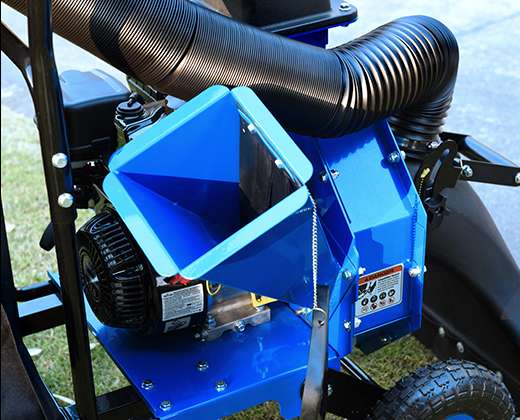
Before diving into specifications, it is crucial to understand the engineering behind these machines. While many people confuse blowers and vacuums, their mechanics and commercial purposes are entirely different.A professional leaf vacuum operates on a high-powered suction mechanism. The engine drives a heavy-duty impeller (a reinforced steel fan), creating a vacuum that pulls massive volumes of air and debris through the intake nozzle. As leaves pass through the impeller, they are aggressively shredded (mulched) by specialized blades before being deposited into a bag collection system, a towed hopper, or directly into a truck bed.
Leaf Blower vs. Leaf Vacuum: The Professional Difference
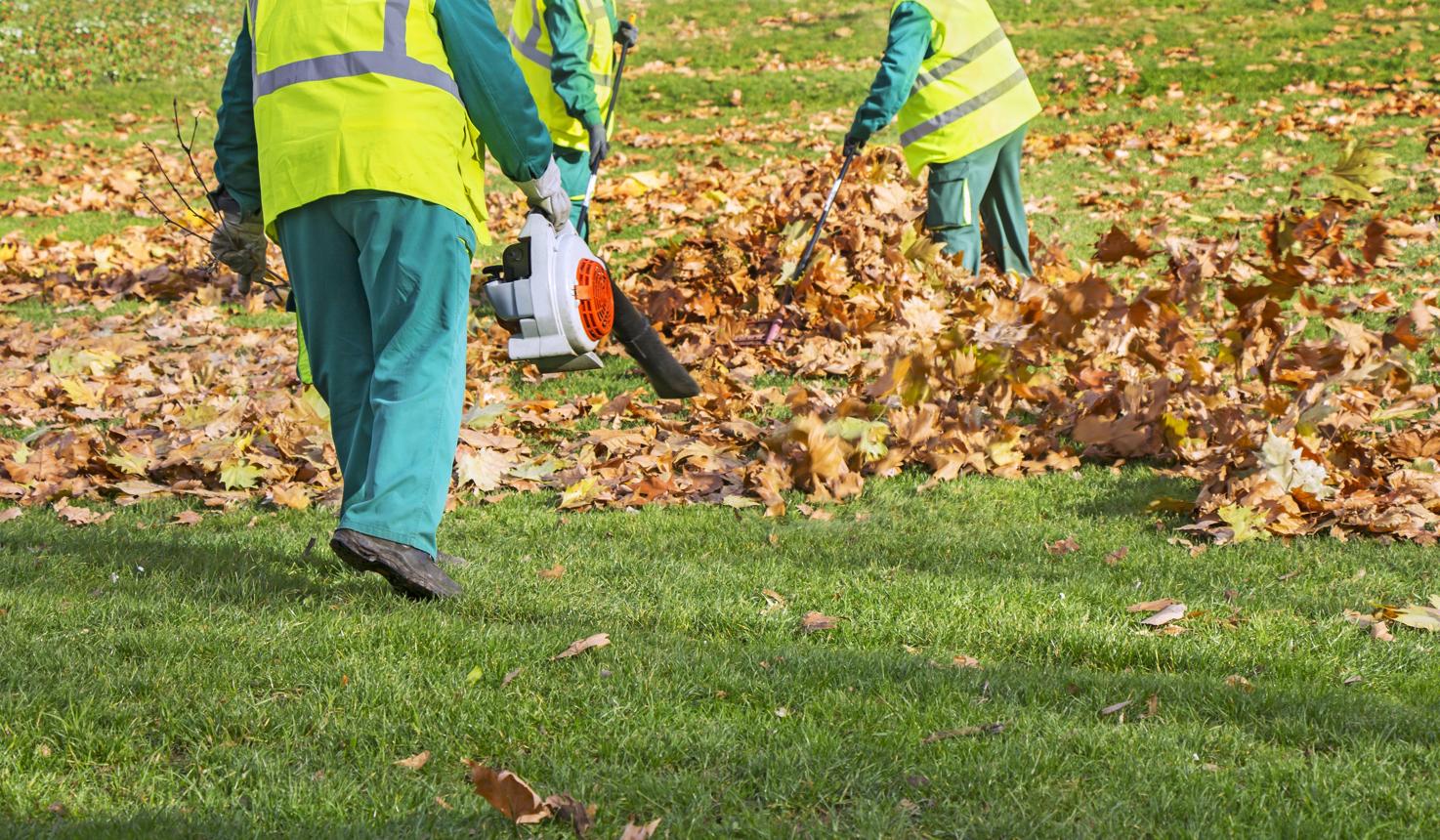
While a leaf vacuum blower for landscaping business might offer dual functions in handheld consumer models, true standalone commercial models are dedicated to one task to maximize efficiency. A blower simply displaces leaves, moving them from point A to point B. A vacuum collects, reduces the volume of, and stores the debris for immediate, easy disposal.
| Move leaves & debris | Yes | No |
| Collect & remove debris | No | Yes |
| Mulching / Shredding | No | Yes |
| Ready for immediate disposal | No | Yes |
Key Selection Factors for Commercial Leaf Vacuum Equipment
When evaluating a leaf collection system for professionals, you must look beyond the initial price tag. The following six factors are the core metrics that determine whether a machine will be a relentless workhorse or a liability for your fleet.
1. Power Output
The performance of a leaf vacuum is dictated by two main metrics: CFM (Cubic Feet per Minute) and MPH (Miles Per Hour).
- CFM determines the volume of air the machine can move. High CFM allows you to process massive piles of leaves quickly.
- MPH measures the speed of the air. High MPH provides the penetrating suction needed to lift wet, matted leaves, acorns, or heavy debris like pinecones from the turf.
For commercial applications, a minimum of 350 CFM is required, but heavy-duty tasks often demand much more.
| Residential/Light Commercial | 200–350 CFM | Light, dry leaves on hard surfaces and patios. |
| Landscaping Service | 350–500 CFM | Daily commercial use, varied terrain, moderate wet leaves. |
| Municipal / Farm | 500–800+ CFM | Heavy, wet foliage, large branches, massive estates, thick roadside debris. |
2. Collection Capacity & Containment Systems
The size of your collection receptacle directly dictates your operational uptime. High-frequency emptying kills efficiency.
- Bags (1.5 to 4 bushels): Common on walk-behind models. Good for moderate commercial properties.
- Hoppers/Trailers: Common on tow-behind models, capable of holding massive volumes of shredded debris.
- Truck Beds: Truck loaders bypass small containers entirely, shooting debris directly into a municipal dump truck or high-sided trailer.
3. Mulching Ratio
Mulching isn't just about saving space; it is a critical cost-saving factor for B2B operations. Commercial vacuums feature serrated impellers that shred leaves, offering a reduction ratio between 8:1 and 18:1.
An 18:1 ratio means 18 cubic yards of raw leaves are reduced to just 1 cubic yard of debris. For a commercial landscaper, this translates to fewer trips to the dump site, significantly lower disposal fees, and less fuel consumed by transport vehicles.
4. Mobility Type
How the vacuum moves across the terrain will define the physical toll on your crew and the speed of the job. In the commercial realm, equipment generally falls into three heavy-duty categories: Walk-behind, Tow-behind, and Truck loader systems.
| Walk-behind | Commercial properties, medium-to-large flat lawns, tight landscapes | Highly maneuverable, stable, excellent for detailed clearing around obstacles | Slower across massive open fields or multi-acre estates |
| Tow-behind | Large estates, golf courses, farms, parks | High capacity, attaches to existing zero-turn mowers or tractors, extreme labor savings | Requires a towing vehicle; less maneuverable in tight garden beds |
| Truck loader | Municipalities, massive contractors, roadside maintenance | Absolute highest efficiency; massive volume processing directly into trucks | High initial investment; requires a dedicated dump truck or trailer |
5. Terrain & Working Environment
Consider what you are picking up and where you are doing it. Are your crews working on manicured turf, roadside gutters, uneven orchards, or hardscapes? Furthermore, commercial crews don't just pick up dry leaves. Your machine must be robust enough to handle wet foliage, small branches, and even urban litter (like paper cups and cans) without destroying the internal impeller.
6. Maintenance & Total Cost of Ownership
A cheap machine that spends half the season in the repair shop is a terrible investment. When buying, evaluate the engine maintenance cycle, the accessibility of the air filters, and the thickness of the steel housing. In the B2B world, the initial purchase price is just a fraction of the Total Cost of Ownership (TCO). You must factor in the cost of potential downtime during peak autumn weeks.
Choosing the Right Leaf Vacuum Based on Application Scenarios
No two businesses have the exact same needs. Here is how different professional sectors should approach their equipment procurement based on the three core mobility categories:
Landscaping Service Providers & Estate Managers
For businesses handling commercial office parks or large residential properties, a balance of maneuverability and speed is essential.
- Recommendation: Walk-behind vacuums are perfect for navigating around flower beds, sidewalks, and hardscapes. For crews managing expansive, multi-acre estates or golf courses, adding a Tow-behind collector to your zero-turn mowers allows a single operator to clear massive areas continuously without breaking a sweat.
Farms, Orchards & Campuses
Agricultural settings and sprawling university campuses present unique challenges: massive open areas, extremely heavy debris, and an uneven terrain.
- Recommendation: Tow-behind leaf vacuums are the ultimate solution here. Since farms and campuses typically already operate utility tractors, ATVs, or large mowers, towing a high-capacity collector allows for rapid clearing of wet leaves, heavy fruits, and branches during the short, intense autumn peak season. Many agricultural equipment distributors that source China cultivator products also integrate tow-behind leaf vacuum systems into their seasonal outdoor maintenance equipment portfolios.
Municipal & Road Cleaning Teams
City workers dealing with roadside gutters, parks, and post-storm event cleanups face astronomical volumes of both organic debris and litter. Standard bags and hoppers are useless here.
- Recommendation: Truck loader systems. These heavy-duty beasts allow a small crew to move along miles of roadway, vacuuming massive piles of leaves and debris directly into a municipal dump truck or trailer without ever stopping to empty a receptacle.
Retailers & Distributors
If you are an equipment distributor, your focus should be on building a comprehensive SKU catalog that may include complementary categories such as commercial leaf vacuum systems and lawn sweeper wholesale products for year-round grounds maintenance applications. Your product line needs a clear tier strategy—offering Walk-behind, Tow-behind, and Truck Loaders—to cater to different commercial buyers. Partnering with a manufacturer that ensures robust OEM/ODM support and readily available spare parts is crucial for building your brand's reputation.
Walk-Behind vs Tow-Behind vs Truck Loader Systems
One of the most common dilemmas for growing landscaping businesses is deciding how to scale their fleet. Should you buy three walk-behind units, or invest in one massive truck loader? Understanding the operational threshold of each system is the key to maximizing your ROI.
| Operational Efficiency | Medium to High | High (Large area focus) | Very High (Massive volume) |
| Crew Needed | 1 operator | 1 operator (driving mower/tractor) | 2–4 operators (including driver) |
| Initial Cost | Low to Mid-Range | Mid-Range | High (Requires vehicle integration) |
| Ideal Users | Independent Landscapers | Estates, Golf Courses, Farms | Municipalities, Major Contractors |
| Transport Need | Pushed manually / Self-propelled | Towed by ATV, Tractor, or Mower | Vehicle-based, permanently mounted |
The Verdict:
- Choose Walk-behind if your contracts involve detailed work around obstacles and moderate-sized commercial lawns.
- Upgrade to Tow-behind if you have wide-open acres to clear and already own towing vehicles (like zero-turn mowers).
- Invest in a Truck Loader if you are contracted to clear entire city blocks or park systems where debris volume is measured in tons rather than bags.
Common Mistakes When Buying Leaf Vacuum Equipment
Even seasoned procurement managers can make costly errors. Avoid these common B2B purchasing mistakes:
- Only Looking at the Price Tag: Opting for residential-grade equipment to save money guarantees premature engine failure under commercial stress.
- Ignoring Wet Leaf Performance: Dry leaves are easy to move. If you don't spec the machine (high MPH/CFM) for wet, sticky leaves, your crew will be paralyzed after the first autumn rain.
- Underestimating Debris Volume: A powerful vacuum with a tiny bag is an oxymoron. Match the containment size (Bag vs. Hopper vs. Truck) to the size of the properties you manage.
- Ignoring Maintenance Cycles: If it takes two hours and specialized tools just to clear a clogged impeller or change a filter, that machine is draining your daily profits.
Professional Buying Checklist
Before contacting a manufacturer or distributor, run through this executive checklist to define your exact fleet requirements:
- What is the average daily working area size? (Acres/Square footage per site)
- What type of debris are you dealing with? (Dry leaves, wet matted leaves, branches, urban litter)
- Do you require high-ratio mulching (15:1+), or just direct collection?
- How many operators are available per job site?
- What towing/transport vehicles do you currently own? (Zero-turn mowers, tractors, ATVs, dump trucks)
- What is the expected peak season workload? (Hours per day of continuous heavy-duty operation)
Why Professional-Grade Leaf Vacuum Systems Matter for Landscaping Businesses
At the end of the day, commercial equipment is about ROI, not the initial purchase price. Professional-grade leaf vacuum systems matter because they offer unparalleled labor savings. By cutting a 4-hour manual raking and bagging job down to 45 minutes with a Tow-behind or Walk-behind system, your crews experience faster turnover.Faster turnover means you can fit more client contracts into a single workday without increasing your payroll. Furthermore, the durability of commercial engines and reinforced steel impellers ensures that your equipment survives the brutal 10-hour days of the fall peak season year after year.
Intradin Professional Leaf Vacuum Solutions for Commercial Outdoor Cleaning
When it comes to outfitting your fleet or stocking your dealership with top-tier outdoor maintenance equipment, the manufacturer you choose makes all the difference.Intradin is a globally recognized, professional manufacturer of premium leaf collection systems. We don't just build machines; we engineer comprehensive, commercial outdoor debris management solutions designed to withstand the toughest environments.
Intradin Product Categories
Our product lineup is specifically tailored for commercial applications, covering every scale of outdoor maintenance:
- Walk-behind Leaf Vacuum Systems: Engineered for maximum suction and aggressive mulching ratios. These highly maneuverable units are designed to reduce crew fatigue on commercial properties while easily navigating around hardscapes and tight corners.
- Tow-behind Leaf Collectors: Built for massive open spaces. These high-capacity systems seamlessly attach to your existing tractors, ATVs, or zero-turn mowers, allowing a single operator to clear acres of estates, golf courses, and farms in record time.
- Truck Loader Leaf Collection Systems: Industrial-grade power designed for municipalities and heavy-duty contractors. These loaders are built to process and shoot literal tons of debris directly into transport vehicles without slowing down.
<ms-cmark